When people come in with persistent pain, it’s rarely confined to a single joint. I often hear “my lower back is sore and now my knees are starting to ache” or “I feel pain in the back of my knee when straightening my leg and tension creeping up into my back.”
This is no coincidence. Back pain and knee pain are deeply connected through the way your body manages force. If movement is inefficient, the stress that should be distributed across your muscles and fascia ends up dumping into joints like the lumbar spine and knees.
At Functional Patterns Burleigh, we don’t just look at symptoms — we correct the root causes that create them. Here’s how knee and back pain link together, the signs to watch for, and how biomechanical training helps break the cycle.
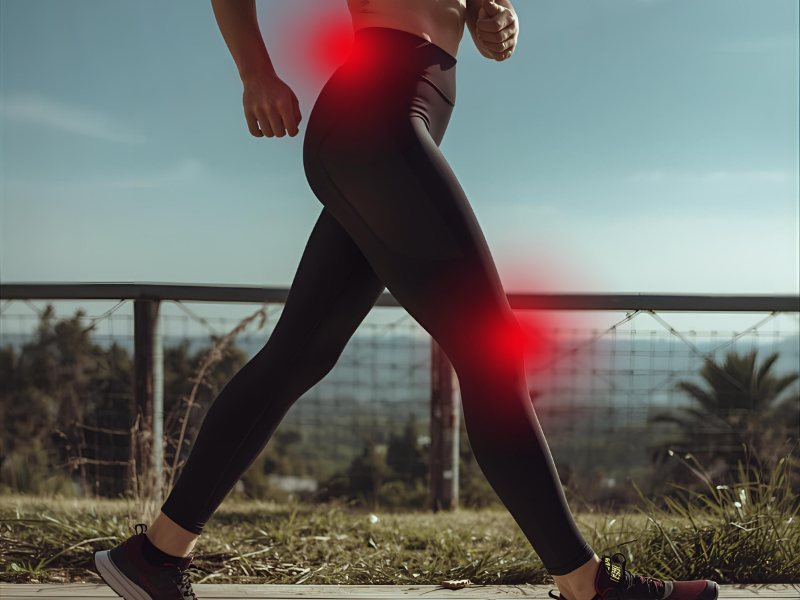
Why Knee and Back Pain Often Happen Together
Your body is an interconnected system. The pelvis and ribcage are designed to stabilise rotation and transfer forces efficiently through your gait. When that system breaks down, pressure is displaced into vulnerable joints.
-
Poor hip extension patterns overload the lumbar spine, creating lower back pain.
-
Collapsed arches or excessive pronation shift load up the chain into the knees.
-
Weak glutes or soleus muscles mean ground reaction forces get redirected into joints instead of being absorbed by muscle.
The result? Knee and back pain showing up together — different symptoms of the same imbalance.
Signs and Symptoms to Look Out For
If you’re experiencing both back and knee issues, these common signs are worth noting:
-
Lower back pain: stiffness, restricted movement, pain sitting or standing.
-
Pain in back of knee when straightening leg: often a sign of fascial tension through the hamstring–calf connection.
-
Pain at the back of knee and calf: a loading problem where forces are bypassing the hips and settling into the posterior chain.
-
Back of knee muscle pain or knee discomfort: usually linked to poor sequencing through the glutes and hamstrings.
These aren’t isolated flare-ups — they’re indicators that your system isn’t distributing force the way it should.
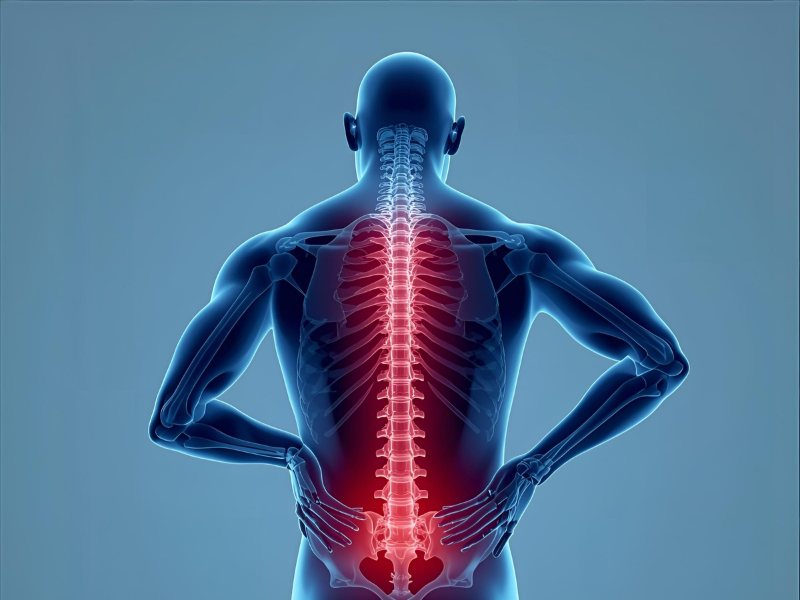
How Knee and Back Pain Interfere With Each Other
When your pelvis isn’t sequencing correctly, the lumbar spine ends up doing the stabilising. Over time, this creates chronic back pain. At the same time, poor pelvic control often drives the knees inward or outward, generating knee pain from inefficient loading.
One problem feeds the other. As the back tightens, hip mechanics worsen, putting even more strain on the knees. As the knees collapse, the back works harder to compensate. This is why chasing pain joint by joint never leads to long-term solutions.
Physiotherapy vs Biomechanics — A Different Lens
Traditional knee pain treatment or back pain relief methods often focus on the joint in pain — exercises for the knee, stretches for the back, or devices for short-term support. While these can help symptoms temporarily, they don’t resolve why the pain developed in the first place.
Biomechanics looks deeper:
-
We assess how your gait, posture, and breathing patterns drive stress into the joints.
-
Instead of isolating a muscle, we retrain the body to manage forces as a unit.
-
The goal isn’t just pain management — it’s restoring efficiency so pain doesn’t keep returning.
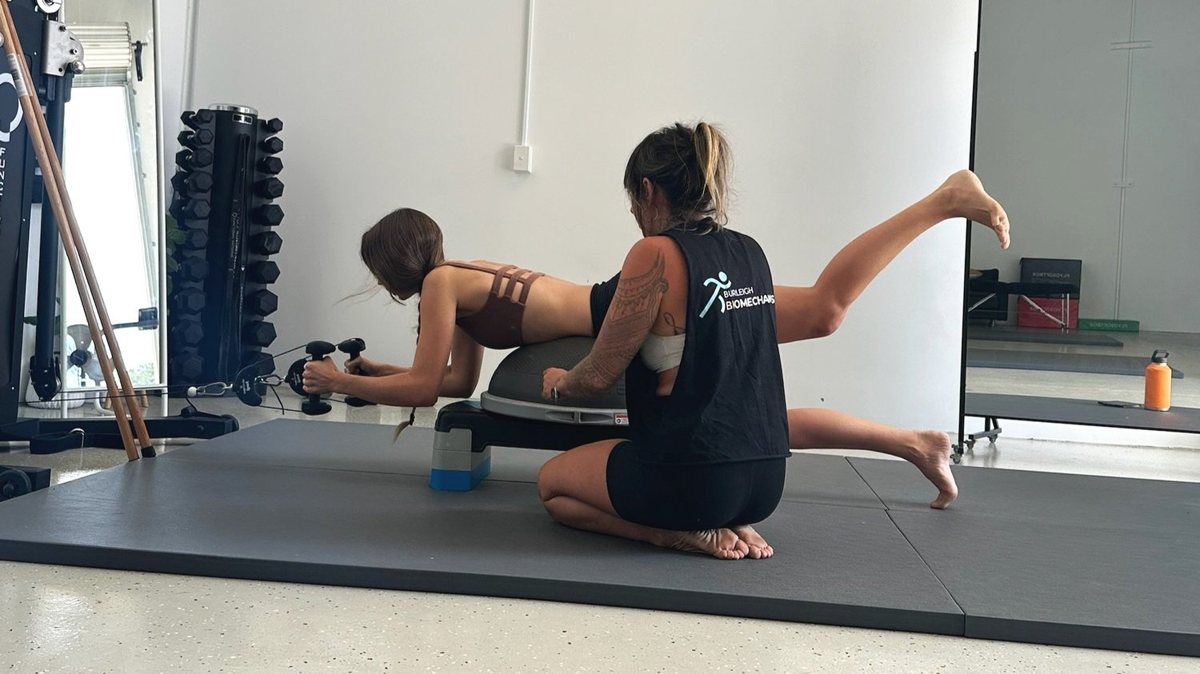
Jen Calleja training correct hip extension
How Biomechanical Training Provides Back and Knee Pain Relief
At Functional Patterns Burleigh, our process focuses on integrating movement systems so your body works the way it was designed:
-
Rebalancing the pelvis and ribcage → takes strain off the lumbar spine.
-
Restoring gait mechanics → distributes force evenly across hips, knees, and ankles.
-
Reintegrating the glute–hamstring–calf chain → reduces overload in the Achilles and knees.
-
Improving fascial tensioning → ensures joints are protected rather than absorbing impact.
When the system works together, both knee and back pain resolve — not because we “treated” them separately, but because we fixed the inefficiency causing them.
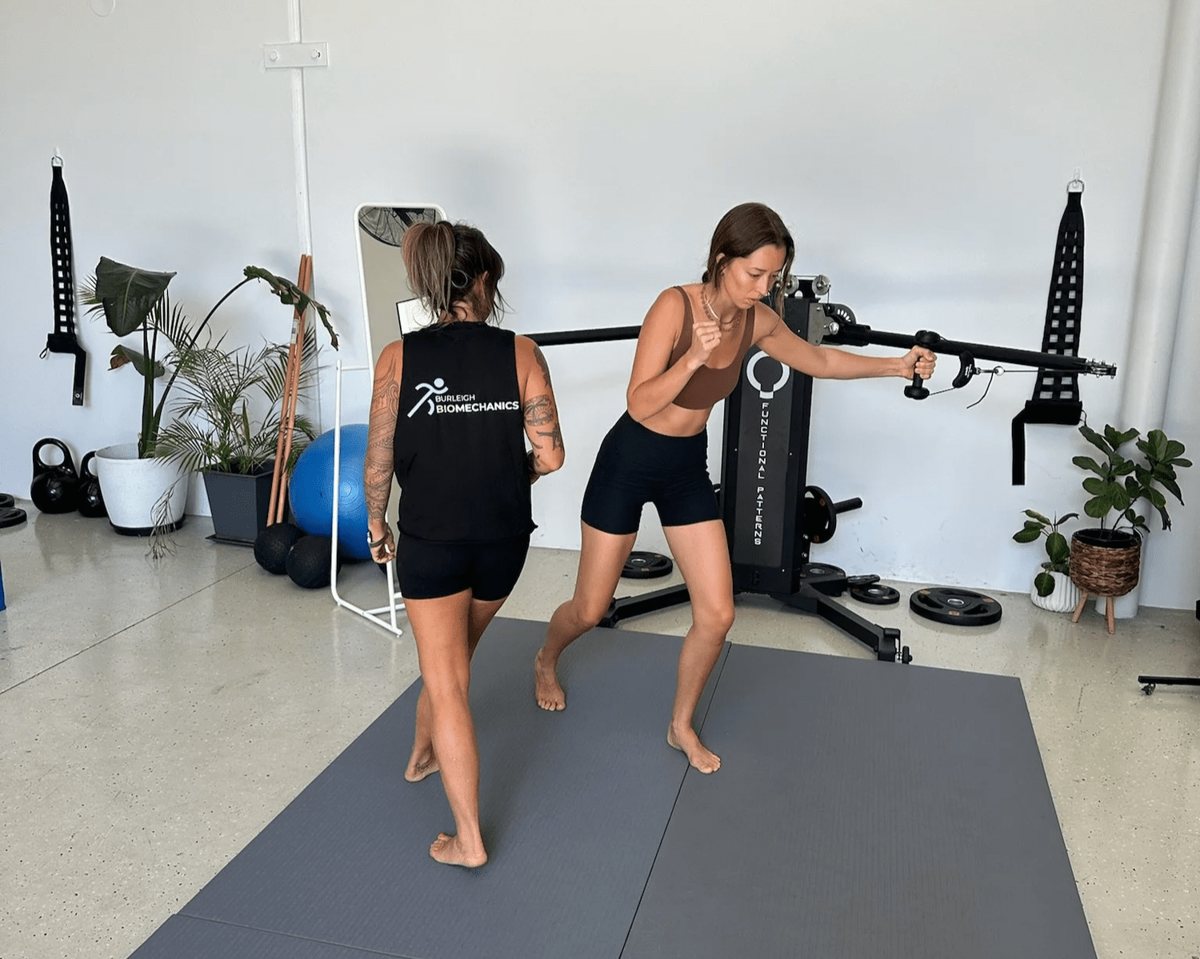
When to Seek Help
If you’ve had:
-
Pain in the back or knees for more than a week,
-
Trouble walking or standing without discomfort,
-
Pain at the back of the knee and calf that spreads upward, or
-
Chronic stiffness despite stretching,
…it’s time to get assessed before these issues compound further.
Move Without Pain Again
Knee and back pain don’t exist in isolation — they’re signals of a larger biomechanical problem. The good news is, once the body is retrained to distribute force correctly, joints stop being the weak links.
At Functional Patterns Burleigh, we specialise in restoring whole-body efficiency so you can move without pain.
👉 Book a Biomechanical Assessment today and start addressing the root cause of your knee and back pain.
Just a man trying to make the world more functional and less painful.
https://functionalpatternsburleigh.com
Previous\ \ Previous\ Beyond Clinical Pilates: Why Functional Biomechanics Outperforms Reformer Routines Next\ \ Next\ \ Stress Fracture or Plantar Fasciitis? How to Tell What’s Really Causing Your Foot Pain