You know the routine.
A couch stretch in the morning. Some pigeon pose after work. Ten minutes on the foam roller before bed. For an hour or so your hips feel loose.
Then you wake up the next day and they're locked up again.
If you've been stuck in that cycle for months, or years, you're not doing the stretches wrong. You're stretching the wrong thing. Your hips aren't the problem. How you stand and move all day is.
Your Hip Flexors Aren't Just "Tight"
Your hip flexors are a group of muscles that connect your spine and pelvis to the front of your thighs. Their job changes depending on where your pelvis sits.
Look at most people with hips that never loosen, and you'll see the same thing: the pelvis pushed forward, ahead of the ribs, and the lower back over-arched.
From that position, the glutes and core stop doing their share of holding you up. Something has to. So the hip flexors grip and brace to keep you upright, every hour you're on your feet.
That tightness isn't a fault. It's your body stabilising itself, because nothing else is.
Every Step Trains Your Hips to Stay Tight
Posture isn't just how you look standing still. It's the position you start every movement from.
If your pelvis sits forward when you stand, it sits forward when you walk, climb the stairs, get out of the car or carry the shopping in. That's thousands of repetitions a day, and every one of them teaches your hips to hold on.
Ten minutes of stretching can't compete with a whole day of practice.
It's also why sitting usually gets more blame than it deserves. Whether you're at a desk in Robina or stuck on the M1, sitting isn't the whole story. How you move when you're not sitting matters more.
Why Stretching and Mobility Work Don't Stick
Most hip routines try to push the joint into bigger and bigger ranges. Couch stretches, deep lunges, hip openers, banded mobility drills.
The trouble is that stretching past a range you can actually control doesn't make your hips healthier. It loosens the tendons and ligaments that support the joint. With less support around the hip, your body has to grip even harder to keep it stable.
So you stretch, the muscles tighten back up to protect the joint, and you stretch again. The routine never ends, because it never touches the reason the tightness is there.
Your Body Is Built to Open the Hip by Moving
Your hip flexors are meant to lengthen while they work, not just while you hold a stretch.
Every time you walk or run well, your thigh travels behind your body. That's hip extension. When it happens with your ribs and pelvis stacked, the front of the hip lengthens under load, thousands of times a day, exactly the way it's designed to.
When your pelvis is pushed forward, that range disappears. Your lower back arches to fake it instead. The hip never opens, and the front of it stays short and guarded.
This is why Functional Patterns is built around the movements the human body evolved to do: standing, walking, running and throwing. We call them the FP First Four. Fix how you do them, and your hips get the range they need every time you move.
How Functional Patterns Fixes It
1. Assess how you stand and walk
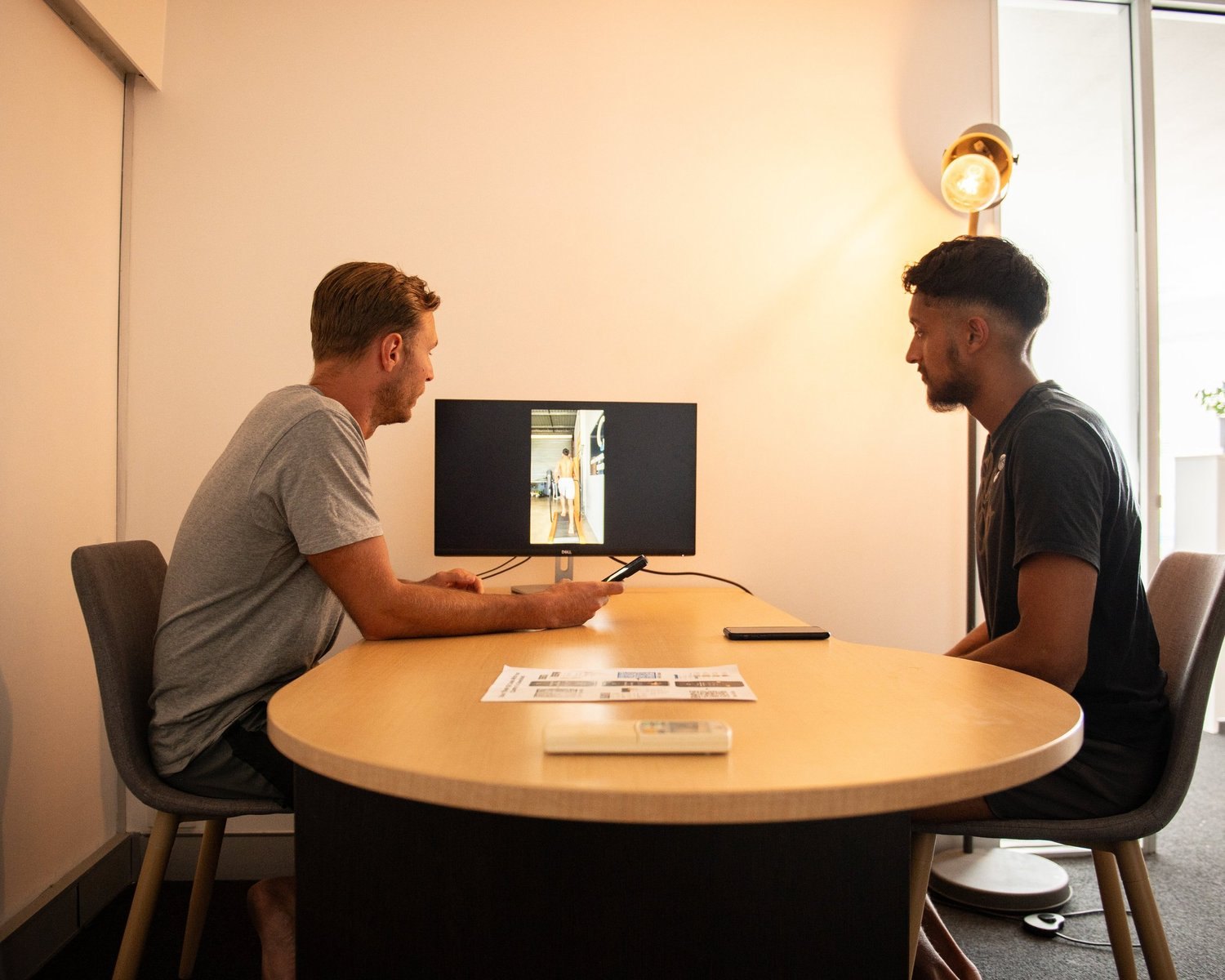
We take posture photos and film you walking. This shows us where your pelvis sits against your ribs, whether your thigh ever gets behind you, and where your body is gripping to stay upright. It also gives you a baseline to compare against as you progress.
2. Release what's stuck
Myofascial release uses slow, sustained pressure with a ball on areas like the front of the thigh just below the hip. Instead of forcing the joint into a bigger range, it lets the tissue soften so the hip can open, without loosening your ligaments.
Release is only the first step. If nothing changes in how you move, the tissue tightens back up.
3. Reposition and stabilise
Next comes bringing your pelvis back under your ribs, building pressure through the core, and spreading your weight evenly between your feet. Once the glutes and core are holding you up, the hip flexors can finally let go.
4. Train the hips to hold it under load
We then train the new position with integrated, contralateral exercises like the contralateral step row and one-arm step press. One arm and the opposite leg work together, with the ribcage rotating against the pelvis, the same way they do when you walk.
From there we carry it into your walking and running, so your hips get the extension they need with every step, and you don't have to think about it.
Stop Chasing Your Hips
You don't need another stretch, another mobility routine, or another foam roller session.
You need to change the way you stand and move, so your hips don't have to hold you up on their own.
If your hip tightness comes with back pain or other aches that won't settle, our posture correction and chronic pain programs follow the same approach. Or see how Functional Patterns works.
Ready to find out why your hips keep tightening up? Book your Posture & Gait Assessment.