The waves are good, so you stay out for two hours. You paddle back and forth from the peak, duck-dive the sets, and sit up scanning the horizon between waves.
By the time you're back on the sand, the back of your neck is burning. Your upper traps feel like concrete. Sometimes there's a headache that sits at the base of your skull for the rest of the day.
If you surf around Burleigh Heads or anywhere on the Gold Coast, this is one of the most common complaints we hear. Most surfers assume it's just part of surfing, or that they need a stronger neck.
It's neither. Your neck is where you feel the problem. It usually isn't where the problem starts.
What Paddling Asks of Your Body
Paddling puts you face down on the board with your chest lifted and your eyes on the horizon. That's a long, loaded extension of the spine, held for most of a session while your arms rotate overhead again and again.
Done well, that extension is spread through the whole back:
- The mid-back (thoracic spine) arches to lift the chest
- The ribcage stays connected to the pelvis, so the trunk holds pressure
- The shoulder blades glide around the ribs as each arm reaches and pulls
- The head simply sits on top, balanced, with the neck doing very little
When that sharing works, you can paddle for hours and your neck barely notices.
Why the Neck Ends Up Doing the Work
When we assess surfers with a sore neck, a few patterns tend to show up again and again:
- A stiff mid-back. If the thoracic spine can't extend, the only way to lift your eyes to the horizon is to crank the neck back. The joints at the base of the skull take the compression.
- The head sits forward on land. Hours at a desk or on a phone leave the head drifting ahead of the body. On the board, that becomes a head that hangs forward and has to be hauled back up with every stroke.
- Shoulders that shrug instead of glide. If the shoulder blades don't move freely around the ribs, the upper traps lift the arm instead. That's the concrete feeling across the top of your shoulders.
- No pressure through the trunk. Without the core holding the ribcage and pelvis together, the body looks for stability higher up. The neck and jaw grip to fill the gap.
That tightness isn't your neck being weak. It's your neck compensating for a back that isn't sharing the load.
Why the Usual Fixes Keep Failing
Neck stretches. If your neck is tight because it's holding your head up, stretching it takes away that support without giving it any other help. It tightens straight back up, often during the next surf.
Neck strengthening. Adding strength to muscles that are already overworking gives you a stronger compensation, not a better pattern. You don't need a stronger neck. You need a back that lifts your chest so your neck doesn't have to.
Massage and dry needling. These can take the edge off for a day or two. They don't change how your body organises itself on the board.
Paddling more to "toughen up". Every session with the old pattern reinforces the old pattern. It's why the problem tends to get worse over the years, not better.
How Functional Patterns Fixes It
Functional Patterns is built around the movements humans evolved to do: standing, walking, running and throwing. Paddling and turning are built on those same patterns, so when they improve, your surfing comes with them.
1. Assess the whole pattern
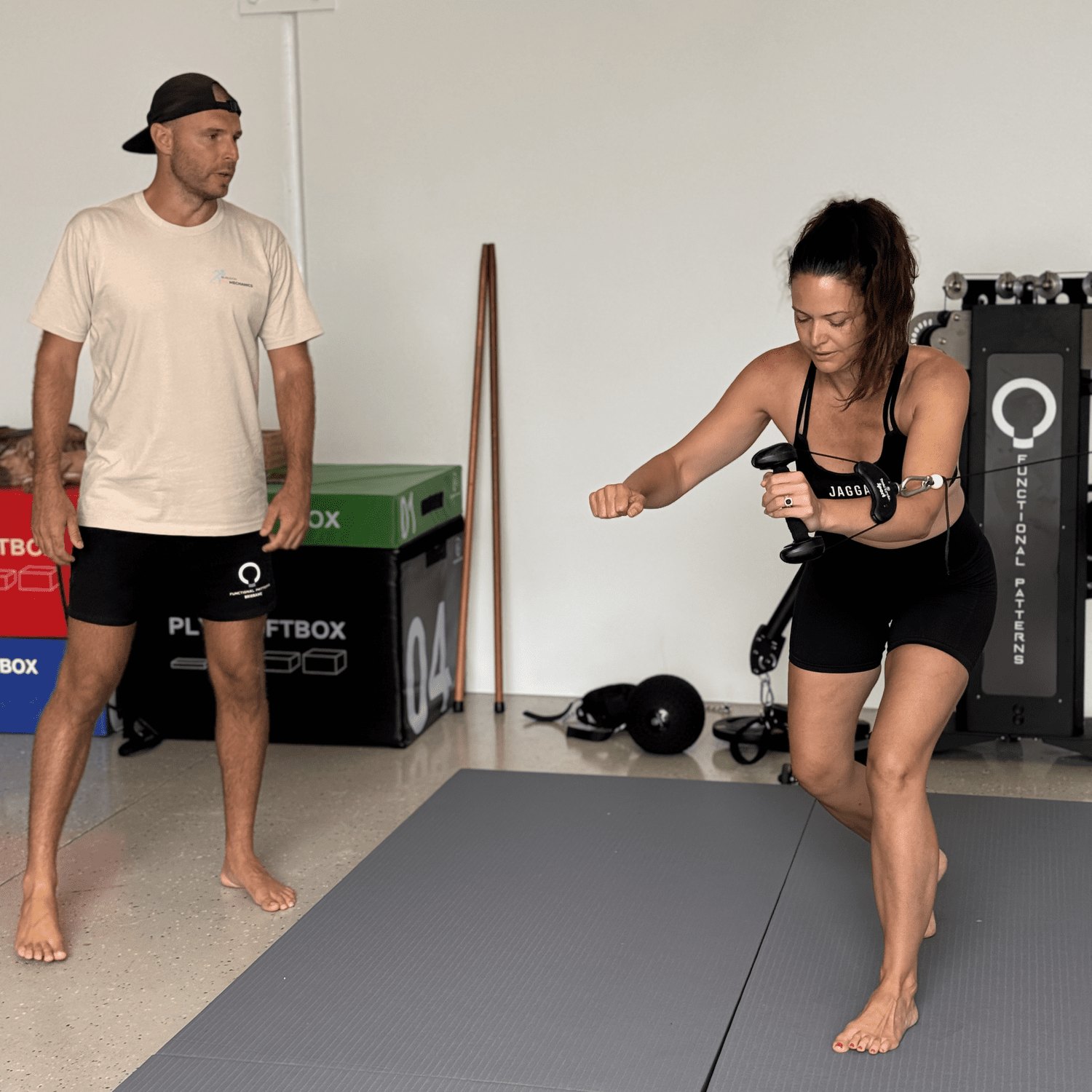
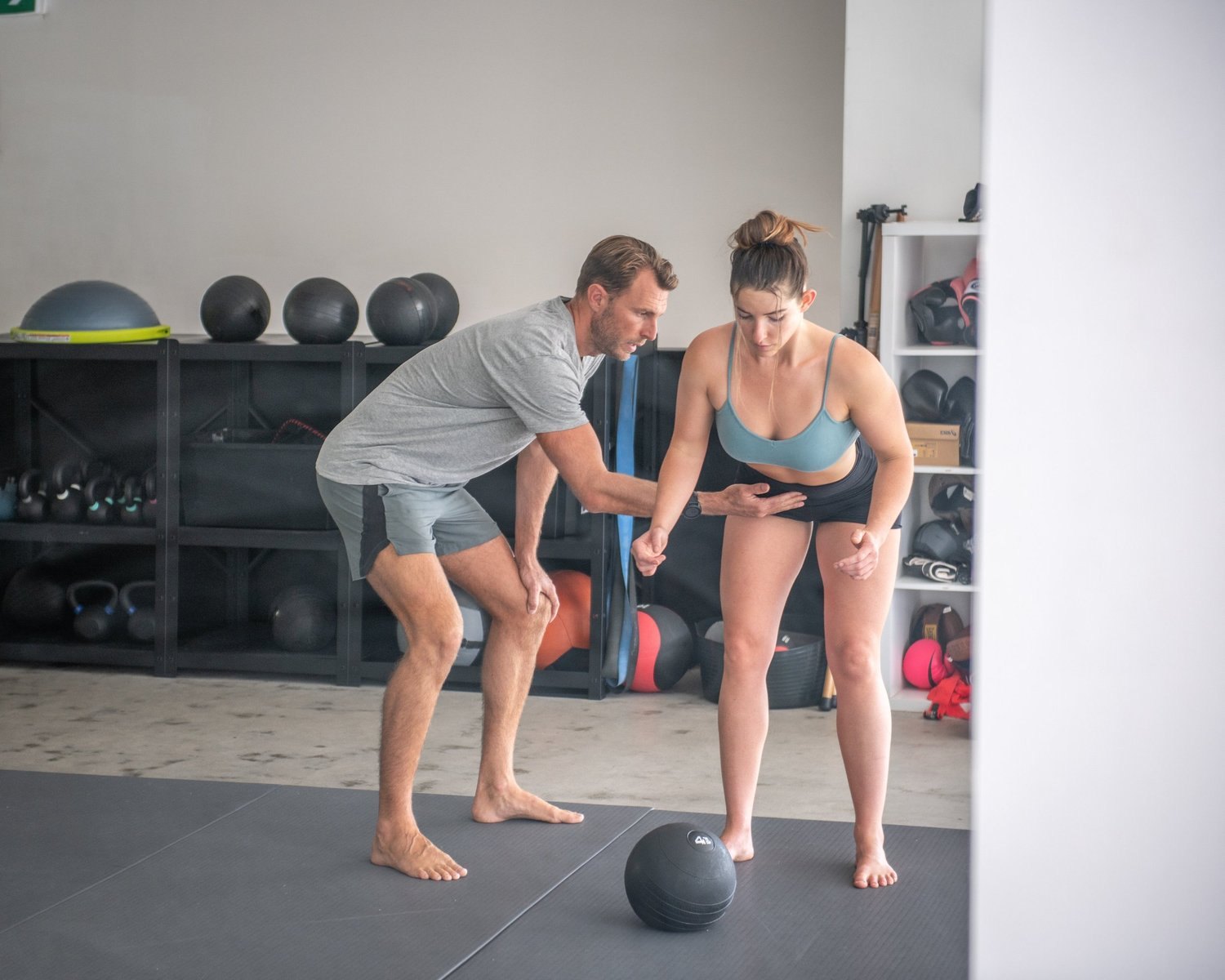
We take posture photos and film you moving, so we can see where your head, ribcage, shoulders and pelvis sit and how they move together. It also gives you a baseline to track your progress against.
2. Release what's restricted
Myofascial release uses slow, sustained pressure to free up stuck tissue in the chest, the front of the neck, the lats and the hip flexors. When the front of the body opens up, the mid-back can finally extend and the neck stops being forced to do it alone.
3. Reposition and stabilise
We bring the ribcage back over the pelvis, build pressure through the core, and get your head balanced over your body instead of hanging in front of it. This is what gives the neck a stable base to sit on.
4. Train rotation and reach as a whole-body pattern
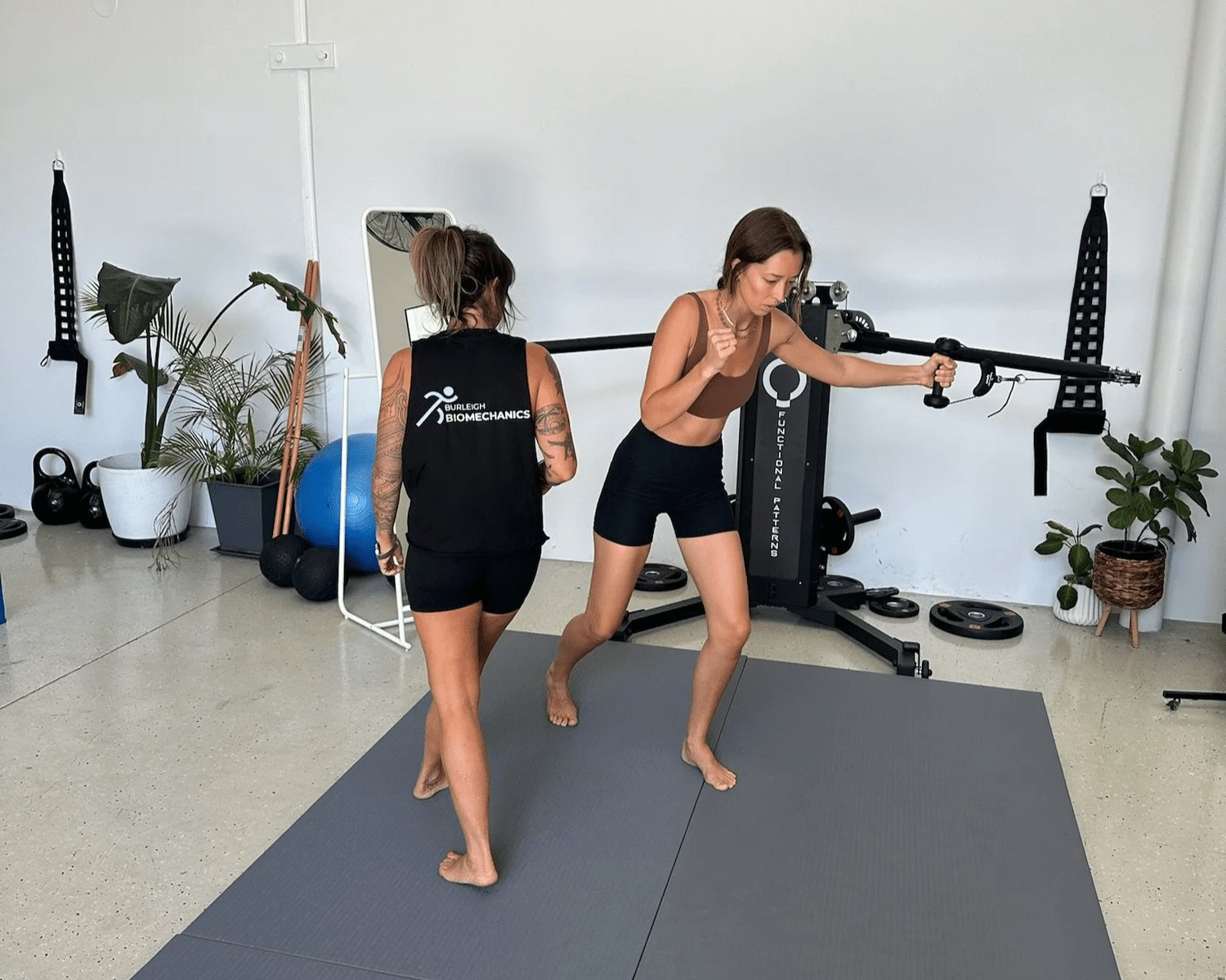
We use integrated, contralateral exercises, where one arm and the opposite leg work together while the trunk rotates. Each paddle stroke then comes from your whole back and the opposite hip, not from your neck and upper traps.
A note on surfing in the meantime
If your neck is flaring up, we may ask you to shorten your sessions for a little while as we rebuild your mechanics. A few shorter surfs now usually means more time in the water later.
When to See a Doctor
Most surfers' neck pain is mechanical and improves when the pattern changes. But if your neck pain started after you hit the bottom or your board, or came on suddenly with a severe headache, get medical help straight away.
See your GP promptly if you have:
- Numbness, tingling or weakness running down your arm or into your hand
- Dizziness, trouble with balance, or changes to your vision
We'll also tell you if anything in your assessment means you should see someone else first.
Surf Longer, Hurt Less
You don't need another neck stretch or another massage.
You need a back that does its share of every paddle, so your neck can just look where you're going.
Learn more about our neck pain and posture correction programs. If your lower back hurts after a surf too, read Lower Back Pain After Surfing? It's Not a Weak Core.
Ready to find out what's really loading your neck? Book your initial assessment.