Knee pain during squats is one of the most common issues we see in active adults across the Gold Coast.
And it’s easy to assume the knee itself is the problem.
So most people try things like:
-
Strengthening quads or glutes
-
Stretching hamstrings or hip flexors
-
Rolling the IT band
-
Switching to knee sleeves or supportive shoes
These can help temporarily, but if the pain returns once you load up again — the issue isn't in the knee.
It’s in the way your body is distributing force during the squat.
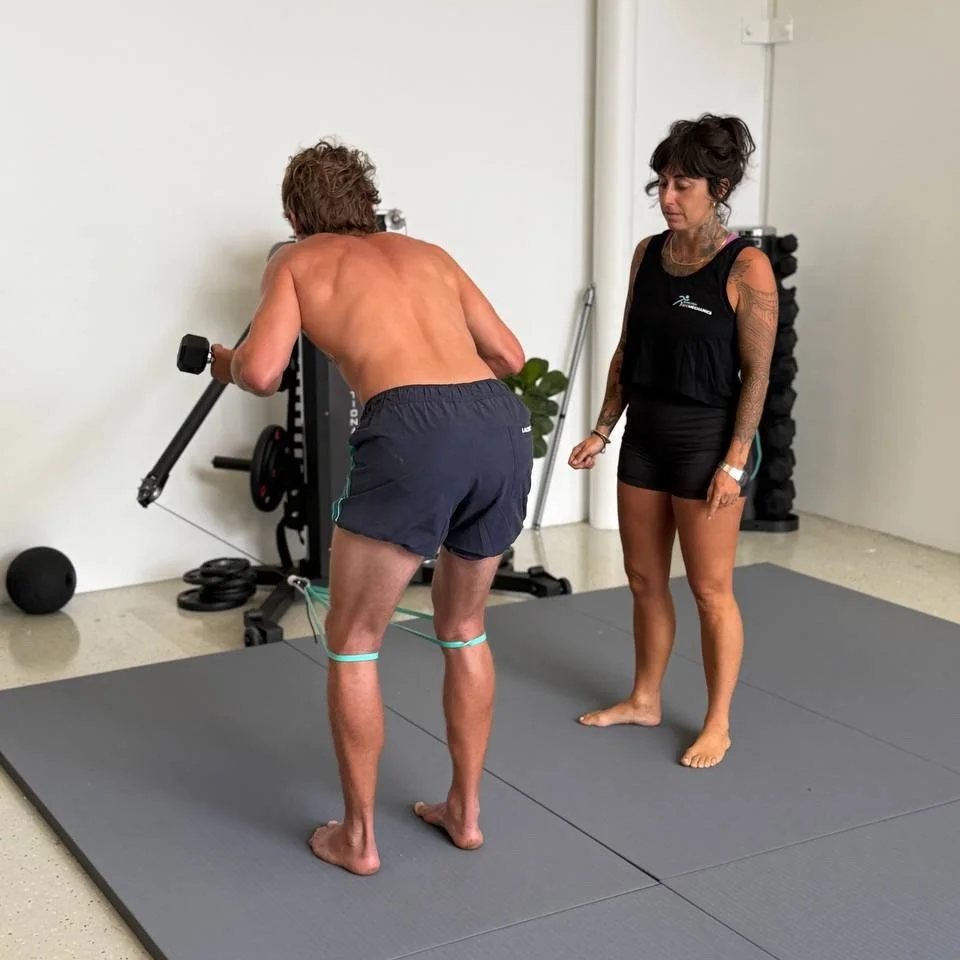
The Knee Is Usually the “Victim,” Not the Cause
When the pelvis and rib cage aren’t well coordinated, the knee is forced to take on stress it wasn’t designed to handle.
Here’s what that often looks like:
-
The pelvis tilts forward (anterior pelvic tilt)
-
The rib cage collapses or shifts forward
-
The feet grip to stabilize
-
The knee loses alignment and begins to track forward or inward
So the knee becomes the pressure absorber for a problem that started higher up the chain.
This is why knee pain:
-
Flares up with squats, lunges, running or stairs
-
Feels better after rest
-
Comes right back when you train again
The movement pattern hasn’t changed yet.
Why Strength Training Alone Doesn’t Solve It
“Just strengthen your glutes” is common advice — but strength without coordination does not change your squat mechanics.
If the pelvis and ribs continue to move together as one block, your knee will keep being the hinge point that absorbs load.
To reduce knee pain long-term, you need to train:
-
Hip stability
-
Rib cage position
-
Foot pressure awareness
-
Breathing mechanics
-
Load sharing across the whole system
When these work together, the knee finally stops being overloaded.
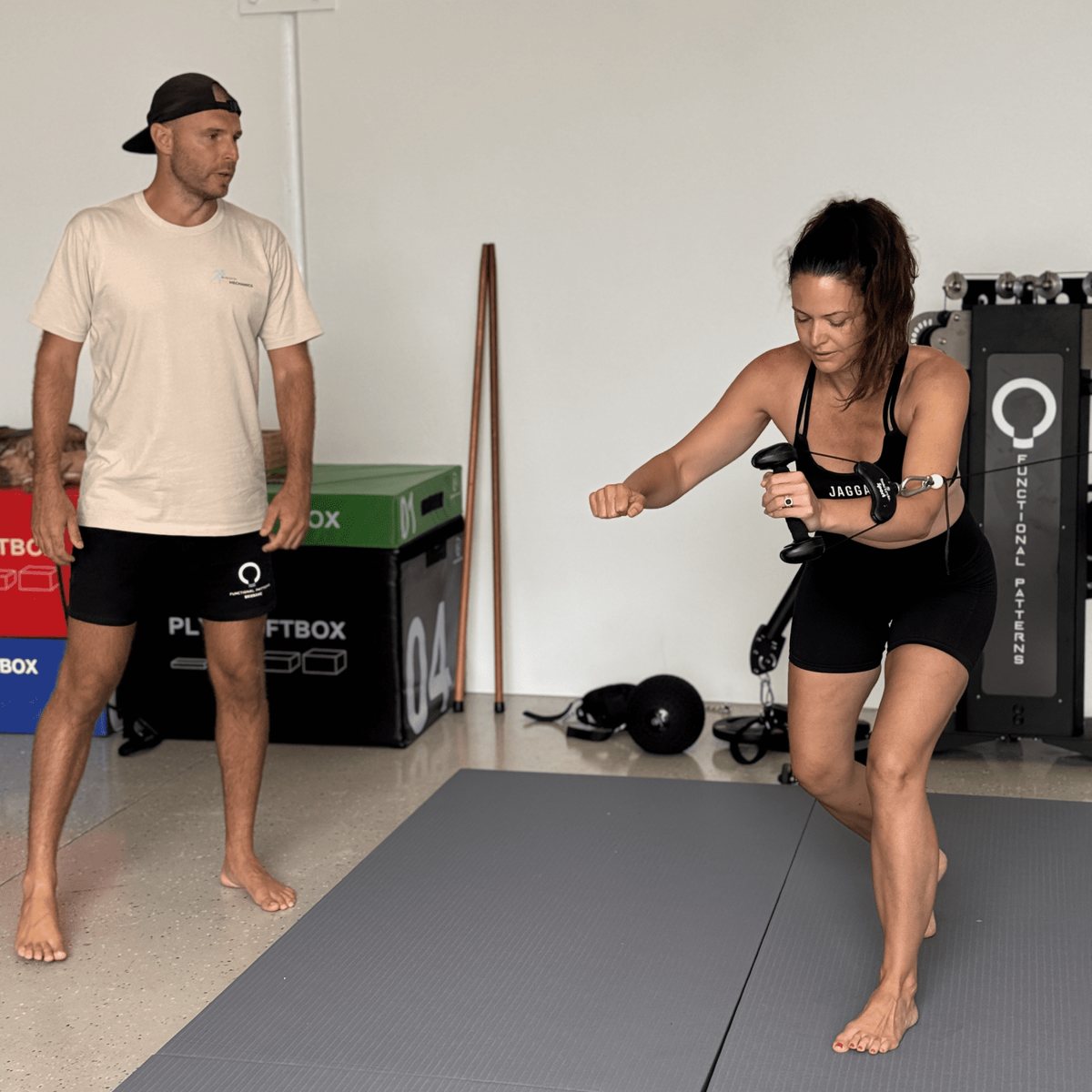
How We Approach Knee Pain Differently
At Functional Patterns Burleigh, we look beyond the knee joint and assess:
-
How your pelvis sits when you walk and squat
-
How your rib cage rotates when you move
-
Which muscles are overworking to stabilize
-
How your foot interacts with the ground
This is all analyzed during your Posture & Gait Assessment, which shows exactly why your knee is absorbing more force than it should.
Once we identify the pattern, we retrain:
-
Pelvic position
-
Hip + rib cage timing
-
Pressure distribution
-
Force efficiency in standing, walking, and lifting
The knee begins to move the way it was designed to move — without pain and without needing to think about it.
If You Want to Squat Without Pain Again
You don’t need to stretch harder.
You don’t need to activate your glutes every workout.
You don’t need to keep foam rolling the IT band.
You need the movement pattern behind the pain to shift.
If you’d like help identifying that pattern:
👉 Book a Posture & Gait Assessment
Free Guide:
The 5 Mistakes That Keep Injuries Coming Back
Most people stretch and strengthen for months without real change because the underlying movement pattern hasn't been corrected. This free guide explains why hamstring tightness returns — and what actually resolves it long-term.
👉 Download the Free Injury Rehab Guide
Just a man trying to make the world more functional and less painful.
https://functionalpatternsburleigh.com
Previous Previous Why Hip Tightness Keeps Coming Back (Even If You Stretch Every Day) Next Next Why Hamstring Tightness Keeps Coming Back (And What Actually Fixes It)