Your jaw clicks when you eat. It aches by the end of the day. You wake up with a tight face, a sore temple, or a headache that sits right behind your eyes.
Maybe your dentist has noticed the wear on your teeth and fitted you with a night guard. Maybe you've had jaw massage, dry needling, or a few rounds of exercises from a physio.
It helps for a while. Then it comes back.
We see this a lot at Functional Patterns Burleigh, and people on the Gold Coast are often surprised by what we tell them: your jaw is where you feel the problem. It usually isn't where the problem starts.
Your Jaw Is Part of a Bigger System
The jaw joint (the temporomandibular joint, or TMJ) doesn't work on its own. It sits on top of your skull, which sits on top of your neck, which sits on top of your ribcage and pelvis, which sit on top of your feet.
Your body is held together by a continuous web of muscle and fascia. Change the tension in one area and it changes everything connected to it. This is called biotensegrity.
So when we look at someone with jaw pain, we ask a different question. Not "what's wrong with the jaw?" but "why does the jaw feel it has to work this hard?"
Why Your Jaw Clenches
Clenching is a stabilising strategy. When the rest of your body can't hold you upright and steady, the muscles of the jaw, neck and shoulders grip to help out.
A few patterns come up again and again in our assessments:
- The head sits forward of the body. For every centimetre the head drifts forward, the muscles at the back of the neck and the front of the jaw work harder to hold it up. The jaw gets pulled into a constant low-level brace.
- The ribcage flares and can't hold pressure. Without pressure through the trunk, the body looks for stability higher up. The jaw and neck are next in line.
- Breathing lives in the neck and chest. If the diaphragm isn't doing its job, the muscles around the neck and jaw help lift the ribs with every breath. That's around 20,000 breaths a day of extra work.
- The pelvis and feet are unstable. If your base shifts with every step, the top of the chain has to tighten to keep your head and eyes level.
- Stress keeps the whole system braced. A body that's always on guard grips everywhere. The jaw is often the first place it shows.
That tightness isn't your jaw failing. It's your jaw compensating for something further down.
Why the Usual Fixes Keep Failing
Night guards. These protect your teeth, which matters. They don't change why you clench, so the clenching carries on with something softer to bite.
Jaw massage and dry needling. They can calm an overworked muscle for a few hours or days. Once you stand up and move with the same pattern, the muscle goes straight back to work.
Jaw and neck exercises. If your jaw is already gripping to keep you stable, strengthening it adds more tension to a system that has too much. You don't need a stronger jaw. You need a stable foundation underneath it.
Adjustments. Moving a joint can feel like relief. If the pattern loading that joint stays the same, it drifts back.
None of these are bad. They just treat the symptom, not the system producing it.
How Functional Patterns Fixes It
Functional Patterns is built around the movements humans evolved to do: standing, walking, running and throwing. When those are organised, the jaw and neck no longer need to brace to hold you together.
1. Assess the whole pattern

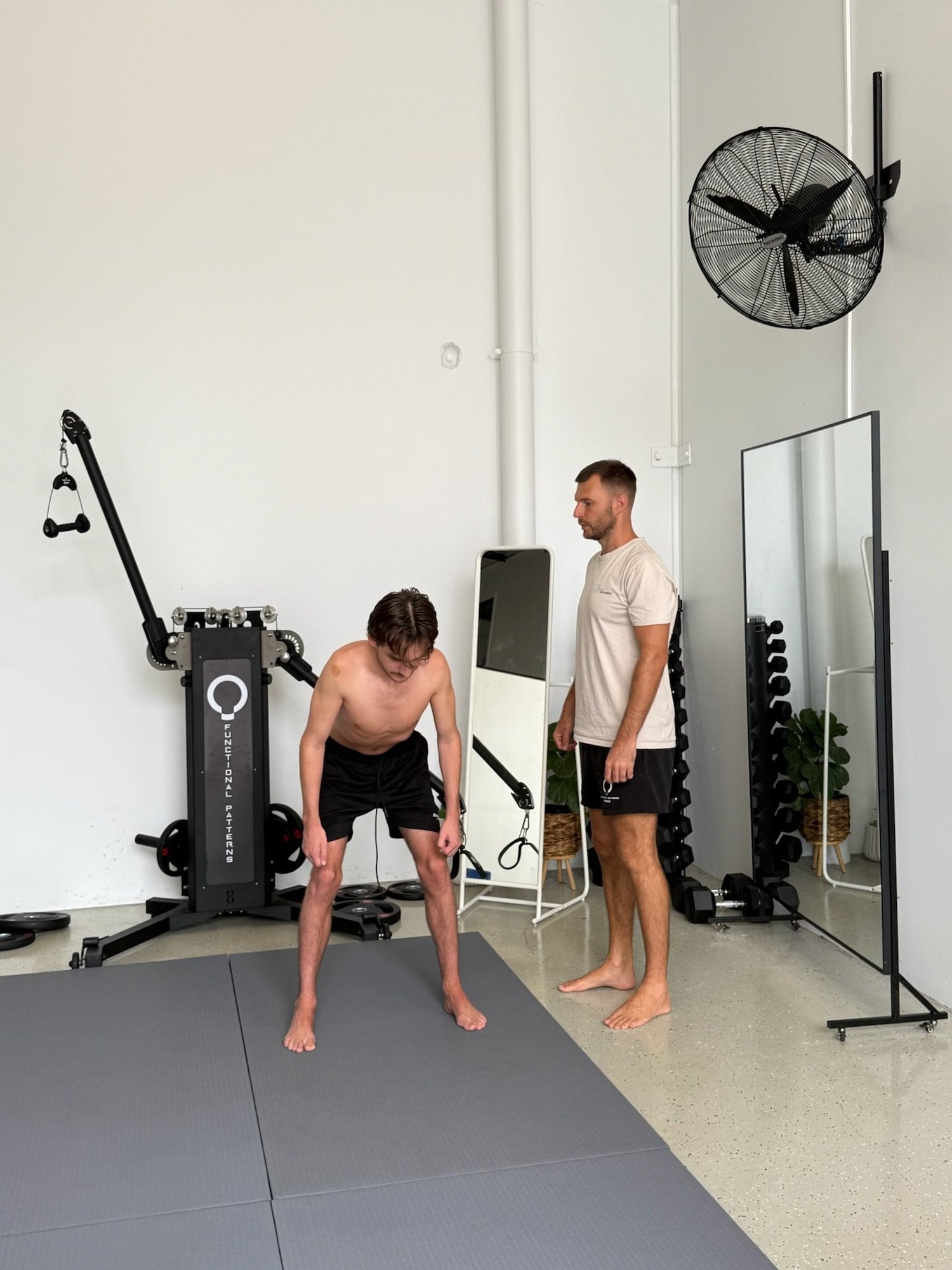
We take posture photos and film you walking and moving. We look at your head position, ribcage, pelvis, feet and breathing, and at how your jaw moves when the rest of you moves. It gives you a clear picture of why your jaw has become the weak link, and a baseline to track your progress.
2. Release what's restricted
Myofascial release uses slow, sustained pressure to free up stuck tissue in areas like the neck, chest and hip flexors. Many clients feel their jaw soften the first time they release the front of their neck and chest, even though we never touched the jaw.
3. Rebuild pressure and position
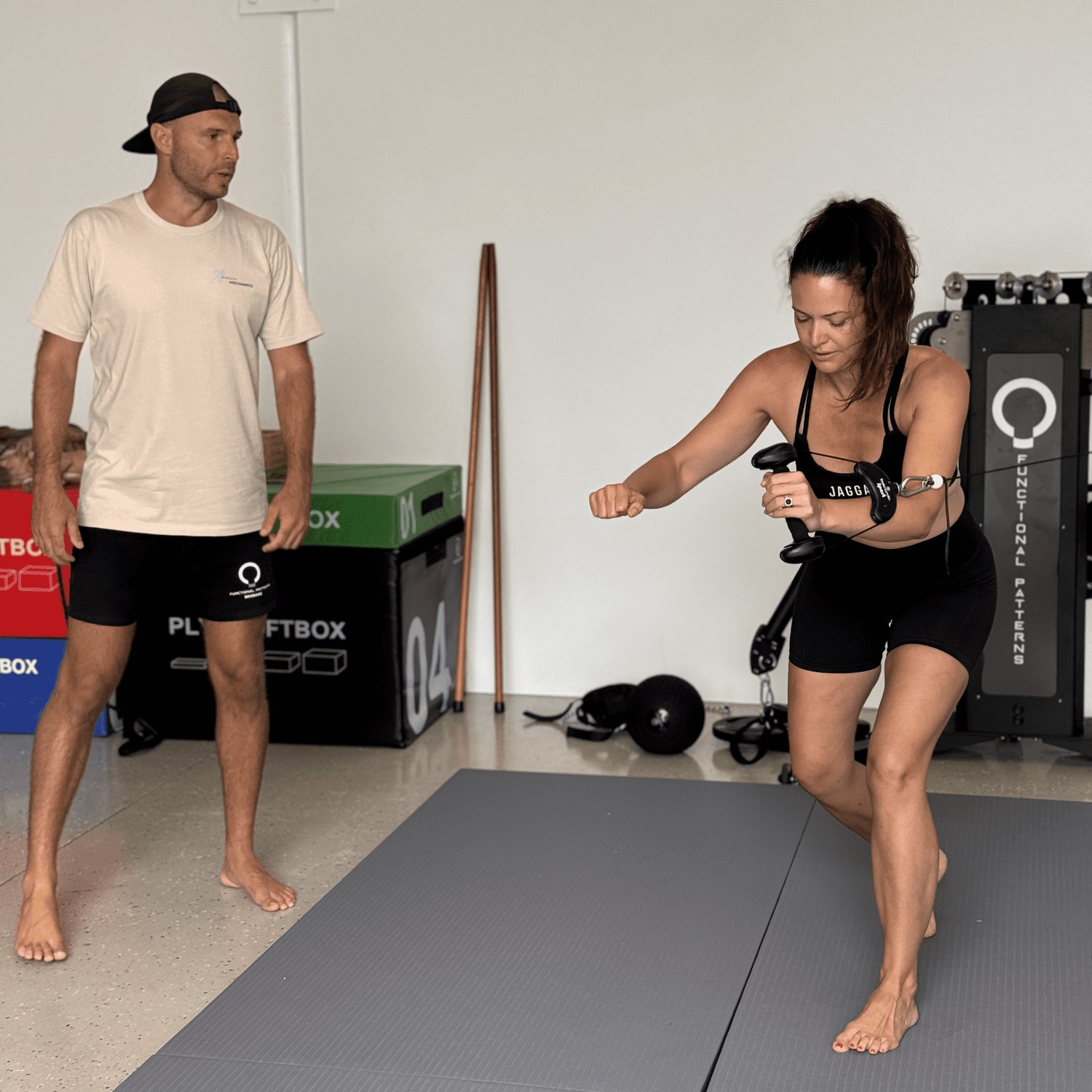
Next, we bring the ribcage back over the pelvis and teach the diaphragm and deep core to work together. With pressure coming from the trunk, the neck and jaw can let go. Breathing starts to come from low in the body instead of up through the neck.
4. Train the whole body to share the load
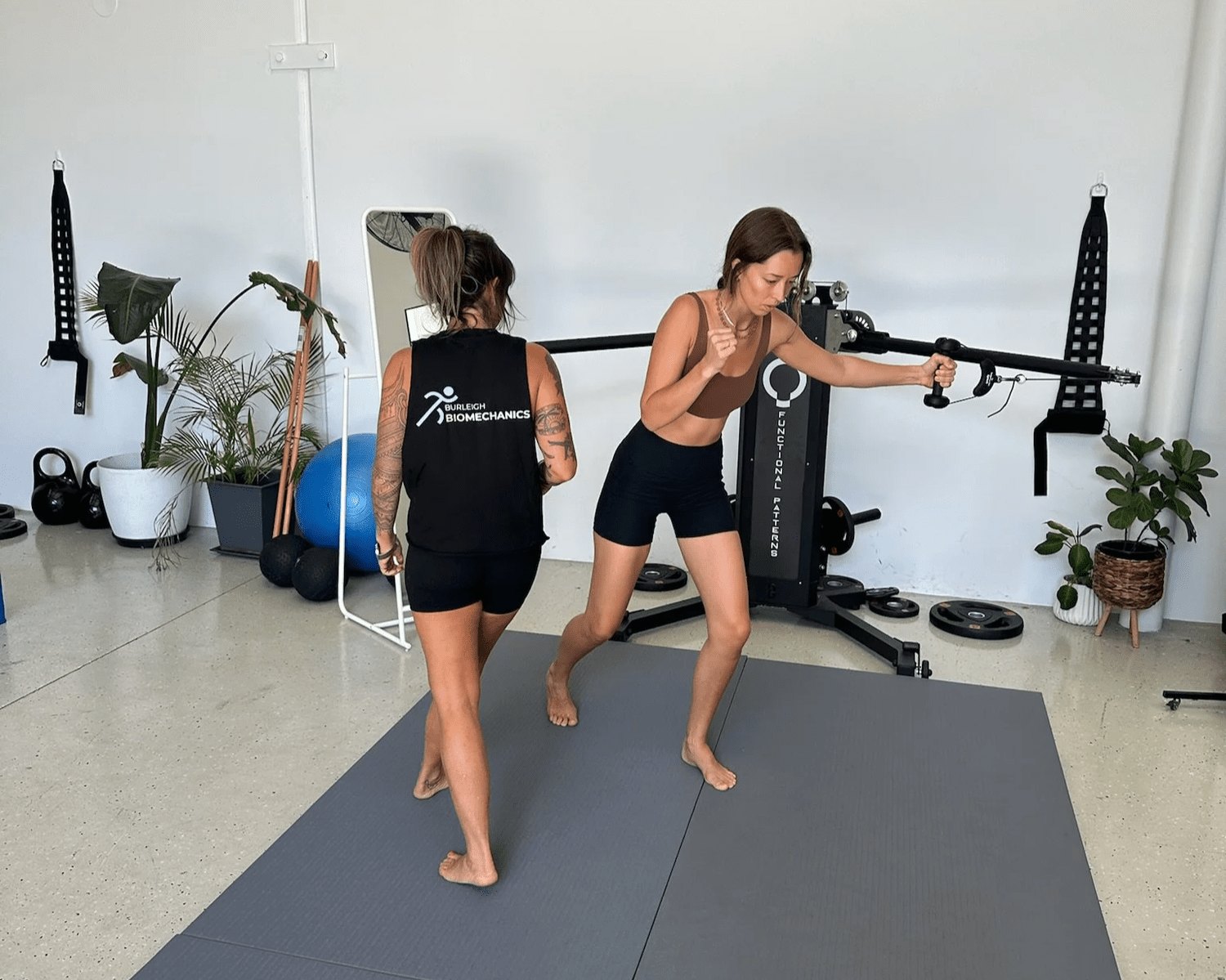
We use integrated exercises like the contralateral step row, where one arm and the opposite leg work together while the ribcage rotates against the pelvis. Your head learns to stay balanced on top of a body that's moving well, instead of being held in place by your jaw.
As the system organises, the jaw and neck decompress. The clicking, clenching and headaches usually fade with it.
A note on your dentist
Some jaw problems need dental care, and we'll always tell you if we think you should see someone else. If you wear a night guard, keep wearing it while we work on the pattern underneath. The two work well together.
Stop Managing It. Fix the Pattern.
If you've been treating your jaw for months and it keeps coming back, it's time to look at the rest of you.
Learn more about our TMJ and jaw pain program, or see how jaw tension connects to our neck pain and posture correction work.
Ready to find out what's really driving your jaw pain? Book your initial assessment.