
You've had back pain for a while. Maybe it shoots into your bum or down your leg. Your GP sends you for a scan, and a few days later the report lands in your inbox:
"L4/5 disc bulge with mild narrowing."
You Google it straight away. Within ten minutes you've read about surgery, nerve damage and "degenerative" spines, and you're scared to bend over to pick up your keys.
Take a breath. We work with people in Burleigh Heads and across the Gold Coast who are in exactly this spot, and the scan almost never tells the whole story.
What a Disc Bulge Actually Is
Between each of the bones in your spine is a disc. It has a tough outer ring and a softer centre, a bit like a jam doughnut. Discs absorb load and let your spine bend and twist.
A bulge means the disc extends a little past the edge of the bones around it. It's usually spread across a wide area, and it often happens slowly over years.
You might also see words like protrusion, herniation or degeneration. They describe how far the disc has moved and its shape. On their own, they don't tell you how much pain you should be in, or how well you can recover.
Disc Bulges Are Incredibly Common
Here's the part most people don't hear: lots of people with no back pain at all have disc bulges.
A large 2015 review of spine scans in people without back pain found disc bulges in around a third of 20-year-olds, rising to more than 80% of people in their 80s. Disc "degeneration" was even more common.
In other words, a bulge on your MRI is often a normal sign of age, like grey hair on the inside. It may be part of your pain. It may have been there for years before your pain started.
That's why two people can have the same scan and completely different symptoms.
So Why Does It Hurt?
Pain usually comes from how your spine is being loaded, not just from what it looks like on a still image.
When we assess clients with a disc bulge, a few patterns tend to show up:
- The pelvis sits ahead of the ribcage. The lower back is held in a constant arch, squeezing the back of the discs with every step.
- The hips don't extend. If the thigh can't get behind the body when you walk, the lower spine bends further to make up the difference, thousands of times a day.
- The trunk doesn't rotate as one unit. Twisting that should spread across the whole spine gets focused on one or two segments, usually the ones on your scan.
- There's no pressure through the core. Without that support, the muscles of the lower back grip to hold everything together. That's the stiffness and spasm you feel.
Your disc isn't failing on its own. It's sitting at the point where your body has been compensating the longest.
What Usually Doesn't Fix It
Rest and waiting. Short-term rest can help a flare settle. Long-term avoidance makes you stiffer and weaker, and makes movement feel more threatening.
Stretching and foam rolling. If your back is tight to keep you stable, stretching takes that stability away without fixing the reason it was needed.
Isolated core exercises. Planks and crunches train the trunk to hold still in one direction. Walking, lifting and turning ask it to rotate and absorb force at the same time.
Passive treatment alone. Massage, adjustments and needling can make you feel better for a while. They don't change the pattern that keeps loading the disc.
What Actually Helps
Functional Patterns is built around the movements humans evolved to do: standing, walking, running and throwing. When those are organised, load spreads through your whole body instead of piling onto one disc.
1. Assess how you move, not just how you look
We take posture photos and film you walking and moving, then go through the footage with you. Your MRI shows the structure. The footage shows how that structure is being used.
2. Release what's restricted
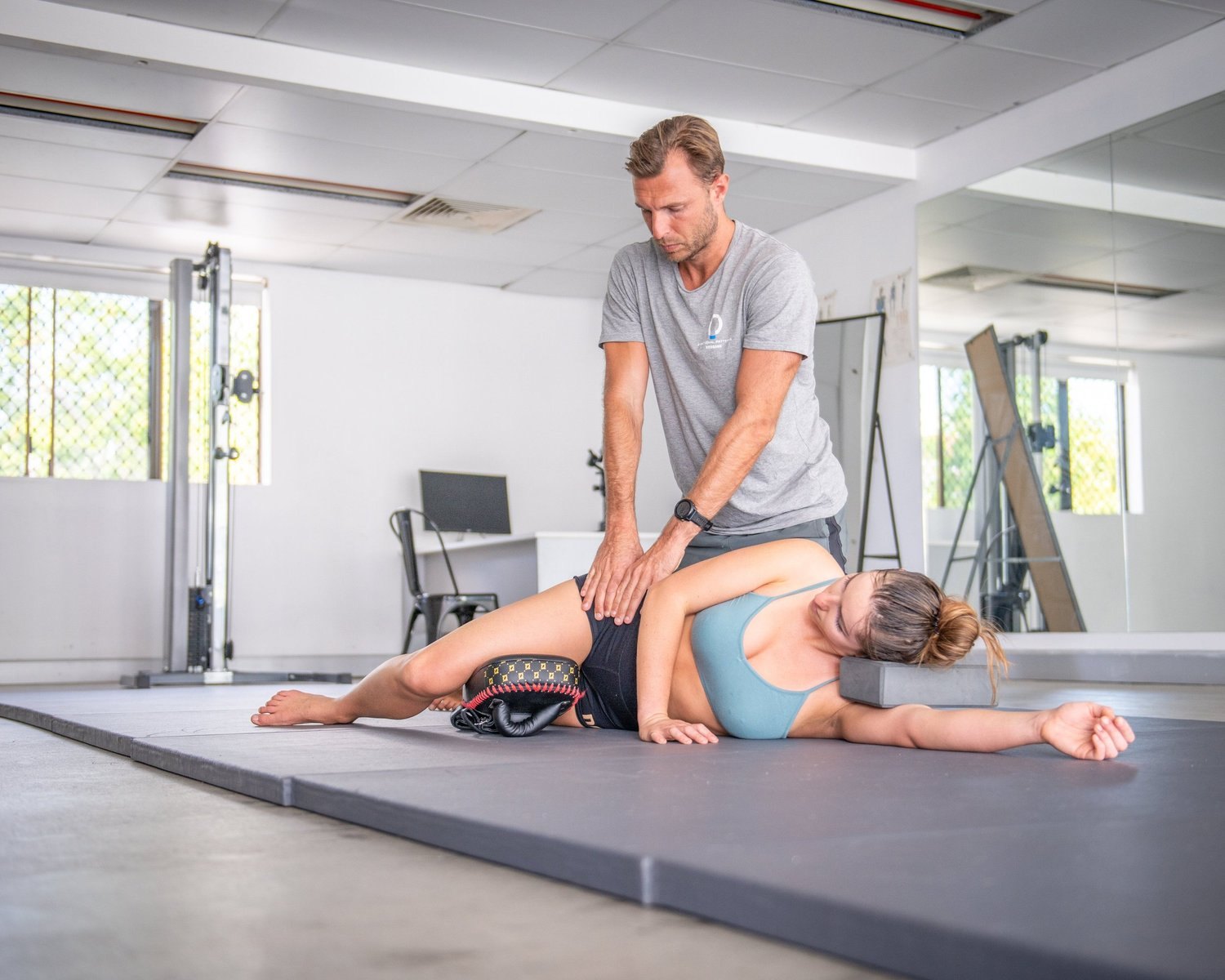
Myofascial release uses slow, sustained pressure to free up tissue in areas like the hip flexors, glutes and the sides of the trunk. This often takes pressure off the lower back straight away.
3. Reposition and stabilise
We bring the ribcage back over the pelvis, build pressure through the core, and stack your joints over your feet. Your lower back gets support from the whole trunk, so it doesn't have to grip on its own.
4. Train the whole body to share the load
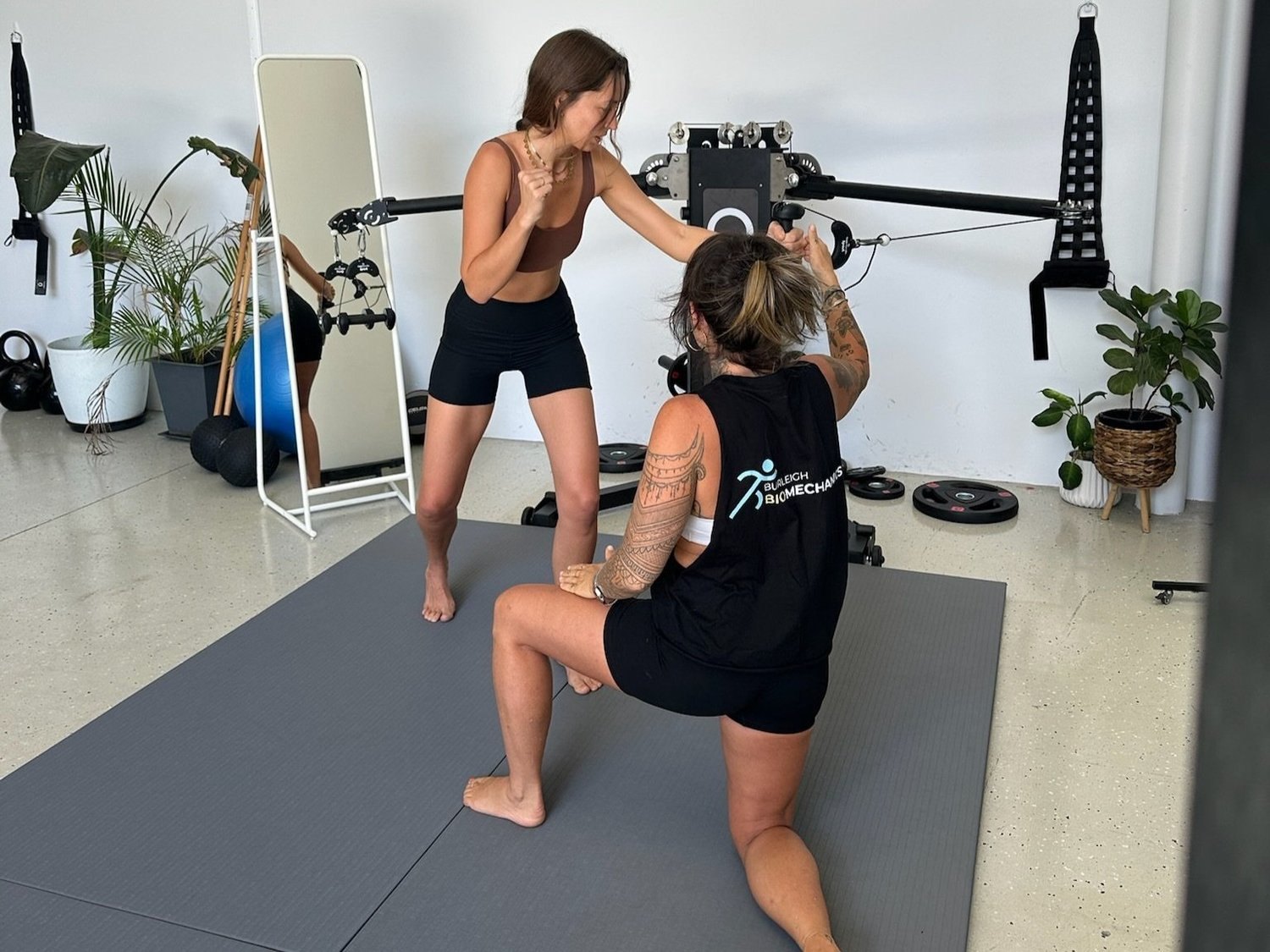
We use integrated, contralateral exercises, where one arm and the opposite leg work together under load. Your hips, trunk and shoulders learn to share the work, so the disc isn't taking every hit.
When to See a Doctor Urgently
Most disc bulges improve. But some symptoms need medical attention straight away, not a training program:
- Numbness around the groin, bum or inner thighs
- New trouble controlling your bladder or bowels
- Weakness in your leg or foot that's getting worse
- Severe pain with fever, unexplained weight loss or a history of cancer
If any of these sound like you, go to your GP or the emergency department today. We'll also tell you if anything in your assessment means you should see someone else first.
Your Scan Isn't Your Sentence
A disc bulge on your MRI is information, not a life sentence. Plenty of people with "bad" scans move freely and pain-free once their body is sharing the load properly.
Learn more about our chronic pain and injury rehab programs, or see how Functional Patterns works.
Ready to find out what's really loading your back? Book your initial assessment, and bring your scan report with you.